

How Do You Organize Sobriety Tokens Effectively?
Last Updated: November 21, 2026
Quick Summary
To organize sobriety tokens effectively, sort them first by date, milestone, and program before buying any holder, then choose a display that grows with your collection. Keep everyday carry chips separate from the full collection at home, and protect tokens by keeping them dry, mounted, and inventoried.
- Lay every chip out and count them before spending money on a holder.
- Recovery Time Links start at $9.99 for one link and expand as you earn milestones.
- Larger chips need two magnets, so order an extra magnet for big medallions.
- Separate chips by program, not by date, when displaying multiple fellowships.
- Photograph each new chip front and back as a backup against loss or damage.
Table of Contents
- Why Organizing Sobriety Tokens Matters More Than You Think
- Step 1: Sort Your Sobriety Coins in Order Before You Buy Anything
- Step 2: Choose a Sobriety Coin Holder That Grows With You
- Step 3: Pick From Practical Sobriety Chip Storage Ideas
- Step 4: Displaying Chips From Multiple Recovery Programs Without Clutter
- Step 5: Care, Cleaning, and Protecting Tokens From Loss or Damage
- Small Spaces, Tight Budgets, and Keeping Your Collection Private
- Build Your Display One Link at a Time
- Frequently Asked Questions
Why Organizing Sobriety Tokens Matters More Than You Think
Learning how to organize sobriety tokens effectively starts with one simple truth: a chip in a drawer cannot encourage anyone.
That is a quiet loss. A recovery milestone you cannot see stops doing its daily work.
At Recovery Time Links, we hear the same story often. Someone has chips going back years, and they want them visible, not buried.
Here is the core idea: sort first, buy second, display third. Most people do it backwards, and that is why their displays fill up and stop working.
Step 1: Sort Your Sobriety Coins in Order Before You Buy Anything
Before you spend a cent on a holder, lay every chip out on a table. This one step prevents most buying mistakes. You cannot pick the right display until you know what you actually own.
Sorting by Date, Milestone, and Program
Start by grouping your chips into three piles:
- By date: oldest to newest, so your story reads in order
- By milestone: month chips, year chips, and anniversary tokens
- By program: AA, NA, or any other twelve-step program you attend
A common mistake is skipping the program sort. If you have chips from more than one fellowship, mixing them in one pile makes the next steps harder.
Write the count on a sticky note. That number tells you how much space you need. If you want a deeper walkthrough on sequencing, see our guide on how to organize sobriety chips by year.
Step 2: Choose a Sobriety Coin Holder That Grows With You
A holder that expands as your time sober grows fits the way a collection actually builds. Recovery Time Links are a modular system: you start with one link and add more as you reach new milestones. There is no limit on the years or milestones displayed.
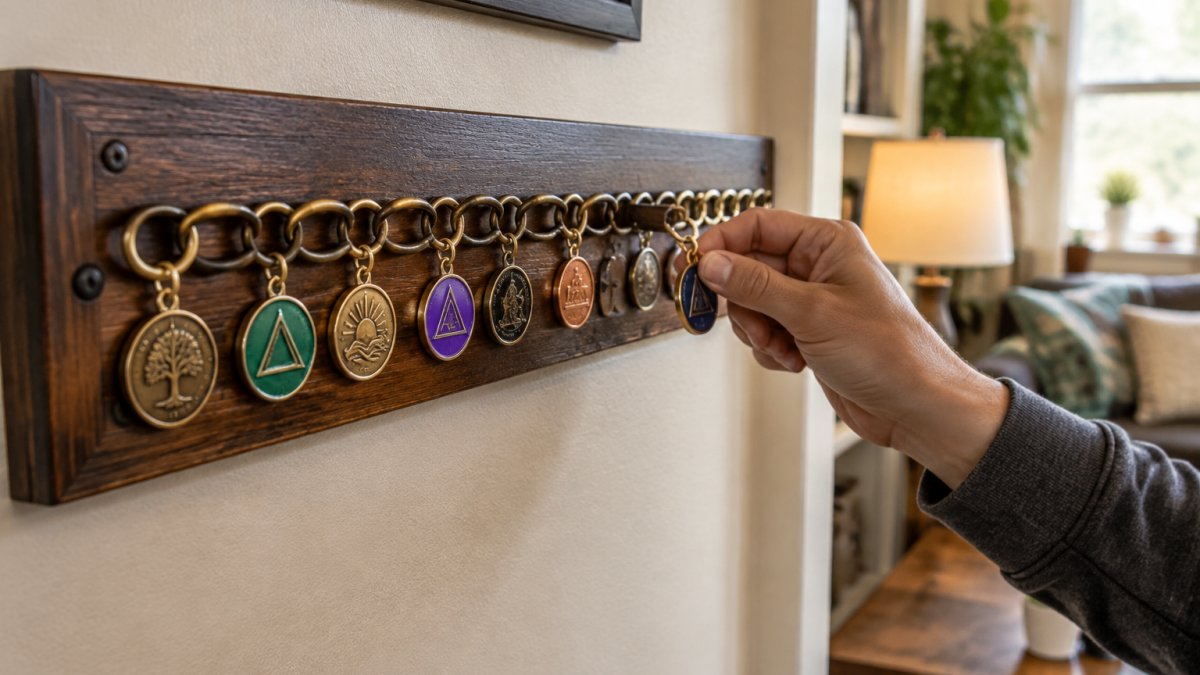
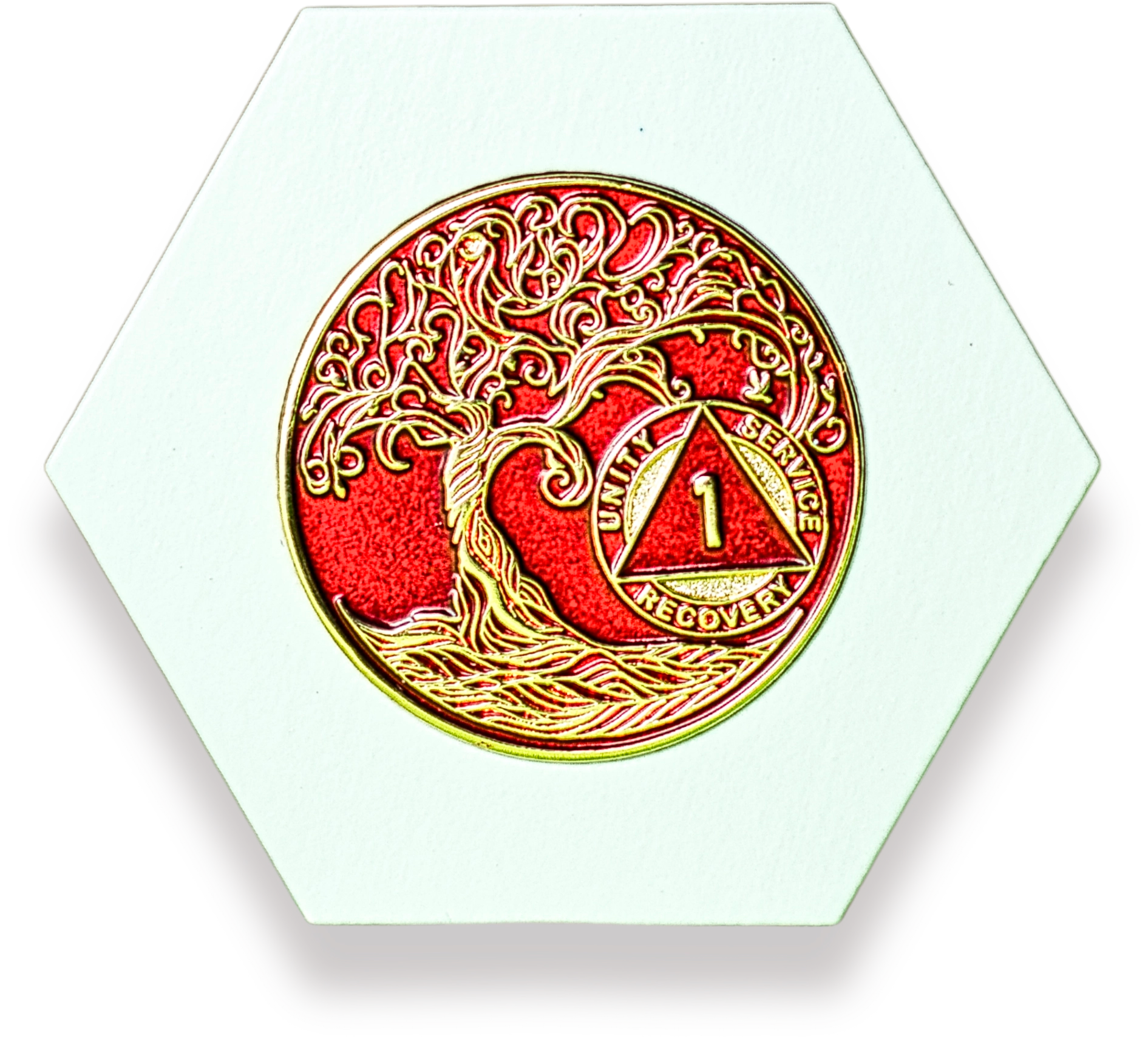
One practical note: larger chips need two magnets, so order an extra magnet if your medallions run big. Starting with one link costs $9.99, and the price per link drops as your collection grows. You can view the modular sobriety chip display and see how a single link becomes a full chain.
Step 3: Pick From Practical Sobriety Chip Storage Ideas
Sobriety chip storage falls into two groups: what you carry and what you keep at home. The right pick depends on how many chips you own, how much space you have, and whether you want your recovery visible or discreet.
Pocket Cases, Keychains, and Everyday Carry
A pocket case or keychain lets you keep one or two chips close. This suits daily use and meetings, where carrying a token matters to many people. Choose a soft-lined case to avoid scratches, and keep the rest of your collection at home. A common pattern is one chip in a pocket case and the full collection on a wall or shelf, so the everyday carry piece takes the wear while the milestones stay protected.
Tabletop Stands, Wall Frames, and Simple Containers
For the full collection, you have options, and each carries a real trade-off:
- Tabletop stands: good for a desk or shelf, easy to move, and renter-friendly because they need no hardware. They hold a fixed number of chips, so a growing collection will eventually outgrow one.
- Wall-mounted displays and frames: keeps chips visible and out of reach of clutter, and uses vertical space instead of shelf space. Installation may require nails or adhesive, which matters in a rental.
- Safe-keeping boxes, trinket boxes, and jars: simple and budget-friendly, but hidden. They protect chips from dust and loss but stop the milestone from doing its daily work.
Each works. The trade-off is simple. Boxes and jars cost less but keep your recovery milestone out of sight. Stands and frames keep it visible but hold a fixed capacity. For more display options, browse our ideas on how to display sobriety chips.
Matching the Storage to Your Space and Budget
A small apartment does not rule out a display. If you have no wall space at all, a lined box in a drawer keeps the collection together.
Budget matters too. You do not need to buy everything at once. Start with one holder and add as you earn each chip.
Watch out: buying a fixed-capacity display before you count your chips is the most common storage mistake.
Each storage option carries a real trade-off between visibility, capacity, and cost.
| Option | Best for | Key difference |
|---|---|---|
| Pocket cases and keychains | One or two chips for daily use and meetings | Soft-lined case avoids scratches; rest stays home |
| Tabletop stands | Desk or shelf display | Easy to move, renter-friendly, fixed capacity |
| Wall-mounted displays and frames | Visible, clutter-free collection | Uses vertical space; may need nails or adhesive |
| Safe-keeping boxes, trinket boxes, and jars | Budget-friendly protection | Simple and cheap, but hidden from sight |
Step 4: Displaying Chips From Multiple Recovery Programs Without Clutter
Displaying chips from multiple recovery programs is easier when you separate by program, not by date. Try one row or one section per fellowship. Grouping by program keeps the story clear and stops the display from looking random.
A few rules that keep it clean:
- Keep one chip per link or slot, never stacked
- Leave a small gap between program groups
- Put your most meaningful chip where you see it first each morning
If you attend more than one fellowship, our full guide on displaying chips from multiple recovery programs covers layouts in detail.
Step 5: Care, Cleaning, and Protecting Tokens From Loss or Damage
Protecting tokens comes down to four habits: keep them dry, keep them mounted, keep them inventoried, and clean them according to what they are made of. Most visible guides stop at "wipe with a cloth," but the material matters, and a few minutes of care prevents the tarnish, scratches, and fading that erase a milestone date.
Cleaning by Material
- Bronze and brass medallions: wipe with a soft dry cloth. If a piece looks dull, a light touch of a non-abrasive metal polish on a cloth, kept away from the inscription, is usually enough. Skip harsh polishes and abrasive pads that can wear the lettering.
- Silver-toned and plated chips: these tarnish faster. Keep them dry and store them away from moisture; a soft cloth and a tarnish-preventing pouch slow the darkening without risking the surface.
- Enamel, painted, and colored chips: avoid solvents and soaking, which can dull or lift the color. A dry soft cloth is the safe default.
- Unknown or mixed materials: when in doubt, dry-clean only. Most practitioners find that a soft dry cloth and a dry location prevent more damage than any polish.
Preventing Loss, Scratches, and Moisture Damage
- Avoid damp spots. Bathrooms and kitchens fade coin design over time. Steam and humidity are the quiet enemies of plated and bronze finishes.
- Mount, don't pile. A mounted display prevents scratches and lost chips. Loose chips in a drawer rub against each other and against keys or coins.
- Keep everyday carry separate. The chip in your pocket takes the wear; the milestones at home stay protected.
Watch out: storing chips loose in a pocket with keys will scratch the milestone date off a medallion. Use a lined case instead.
A Simple Inventory and Backup Workflow
Photograph your collection. A simple phone photo of each chip, front and back, is your backup if a chip goes missing, and it preserves the date and inscription if the piece is damaged. A common pattern is to photograph each new chip the day you receive it and keep the images in one album or folder named by year. For larger collections, a short written list, chip by chip with date and program, makes sorting and replacement easier later.
Privacy and Discreet Storage
Not everyone wants recovery milestones on display, and that preference deserves respect. A lined box in a drawer, a small tabletop stand in a bedroom, or a case kept in a home office keeps the collection personal and protected. Discreet storage is still organized storage: the same sorting, inventory, and dry-location habits apply whether the chips are on a wall or in a closed box.
For long-term protection, our article on durable displays for sobriety medallions explains what holds up over years of daily use.
Small Spaces, Tight Budgets, and Keeping Your Collection Private
A small apartment does not rule out a display. A modular chain mounts on a wall and takes up little room, and it grows upward or along a shelf edge rather than outward.
Budget matters too. You do not need to buy everything at once. Start with one link and add as you earn each chip. That spreads the cost across your recovery journey.
Privacy is the other piece. Some people want their recovery visible; others prefer it subtle. A display in a bedroom or home office keeps it personal.
Build Your Display One Link at a Time
Organizing sobriety tokens is not about having the perfect shelf. It is about keeping your progress where you can see it. Sort first, choose a holder that grows, protect what you have earned, and let the collection build itself.
That is the challenge most of us face: chips that end up forgotten in a drawer. Recovery Time Links offers a modular design that grows with your journey, with no limit on the years or milestones you display, and is designed by someone with long-term recovery experience.
Get started with Recovery Time Links and keep every hard-earned milestone in sight.
Frequently Asked Questions
What should I do with my sobriety coins?
Keep them where you will actually see them. Sort your sobriety tokens by date or milestone, then choose a holder that suits how you live: a pocket case for daily carry, a tabletop stand for a shelf, or a wall-mounted display for the full collection. The goal is visibility, not storage in a drawer. A display you pass every morning turns a stack of metal into a daily reminder of how far you have come.
What is the order of sobriety chips?
Most groups issue chips by time sober: a 24-hour chip, then monthly chips through the first year, then annual medallions. When you arrange sobriety coins in order, sort by the milestone date rather than the size or color. If you attended more than one twelve-step program, group by program first, then by date within each group. That way the sequence tells the story of your recovery anniversary by anniversary without mixing programs together.
Should sobriety chips be arranged by date, milestone, or recovery program?
Date works best for most people because it shows progress at a glance. Milestone grouping suits anyone who wants the early monthly chips separated from the yearly medallions. Program grouping helps if you have chips from AA, NA, or another fellowship and want each journey kept distinct. Pick one primary system, note it in a simple inventory list, and stay consistent so adding a new chip never means rearranging the whole display.
How can I display sobriety tokens without putting them on a wall?
Use a tabletop stand, a shallow trinket box with a glass lid, or a framed shadow box that sits on a shelf. A modular linked display also works on a bookshelf or desk and takes up about as much room as a row of books. For small apartments, keep one anchor display in a spot you see daily and store duplicate or older chips in a labeled keepsake box. That keeps the collection visible without covering your walls.
