

How to Display Chips From Multiple Recovery Programs
Last Updated: October 23, 2026
Quick Summary
How to display chips from multiple recovery programs involves choosing a modular display system that grows with your recovery, organizing chips by program or timeline, and arranging them in a visible location you see daily. A modular link system lets you add chips as you earn them without running out of space or replacing previous achievements.
- Modular display systems expand naturally as your collection grows, unlike traditional fixed cases that fill up quickly.
- Organize chips by program, timeline, or milestone type to tell your recovery story meaningfully.
- Choose a location you see daily, such as a bedroom, living room, or office, to reinforce your progress.
- Store chips not on display in acid-free boxes or velvet pouches to protect them from damage.
- Leave at least 20% empty capacity in your display to accommodate future chips you'll earn.
Table of Contents
- Understanding How to Display Chips From Multiple Recovery Programs
- Why Displaying Your Sobriety Chips Matters
- Sobriety Chip Display Ideas That Work for Long-Term Recovery
- How to Organize Sobriety Chips by Program and Timeline
- AA Chip Display Case Options and Setup
- Ways to Store Sobriety Chips When Not on Display
- Step-by-Step: Setting Up Your Multi-Program Display
- Conclusion
- Frequently Asked Questions
Understanding How to Display Chips From Multiple Recovery Programs
Displaying sobriety chips from different recovery programs tells your unique story. Each medallion marks a milestone. When you've worked through multiple programs, keeping all your chips visible becomes a challenge. Traditional display cases have limits. They fill up quickly. Your hard-earned progress gets hidden away.
This guide covers how to display chips from multiple recovery programs in a way that honors every achievement. We'll walk you through organizing, displaying, and maintaining your collection as it grows.
At Recovery Time Links, we understand that recovery doesn't follow one path. Your chips deserve to be seen and celebrated, no matter which programs you've completed. A modular display system lets you add new chips without replacing old ones.

Why Displaying Your Sobriety Chips Matters
Your sobriety chips are proof of your commitment. They're not just tokens. Each one represents months or years of work, struggle, and victory. Keeping them visible reinforces your progress every single day.
When you see your chips daily, you're reminded of what you've accomplished. This matters especially during difficult moments when cravings or doubt creep in.
Many people hide their chips in drawers or boxes. Out of sight, they lose their power. You forget how many you've earned. Guests don't see your story. More importantly, you stop seeing it yourself. A good display changes that.
Displaying your chips also creates accountability. It says to yourself and others: "I'm proud of this. I'm committed to staying sober."
Sobriety Chip Display Ideas That Work for Long-Term Recovery
Different display ideas work for different spaces and styles. Here are approaches that support long-term recovery:
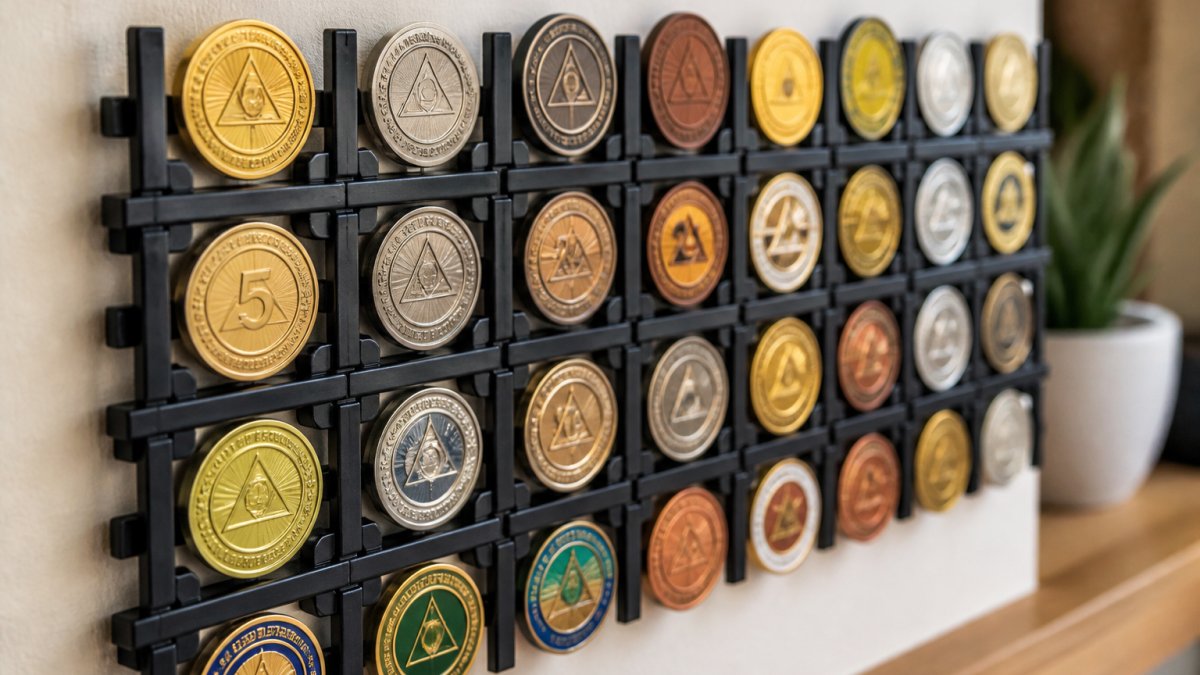
Wall-mounted displays give your chips prominent placement. They're visible to you and visitors. They take up minimal floor space. A modular system like Recovery Time Links lets you add chips vertically without needing a bigger case.
Shelf displays work well in bedrooms or living rooms. You can arrange chips by year or program. Shelves allow flexibility. You can rearrange chips whenever you want.
Desk displays keep your chips close during work. You see them throughout your day. Small modular systems fit perfectly on a desk without taking up much room.
Shadow boxes frame your chips like art. They look professional and intentional. You can add photos or notes alongside each chip. They work especially well for displaying chips from multiple programs side by side.
Rotating displays let you feature different chips at different times. Some people rotate their chips monthly. Others rotate by program or by year earned.
The key is choosing a display that you'll actually use and maintain. If it's too complicated, you'll abandon it. If it's too small, you'll outgrow it quickly.
How to Organize Sobriety Chips by Program and Timeline
Organization makes your display meaningful. Random arrangement looks cluttered. A thoughtful system tells your recovery story.
By program is one approach. Group all your AA chips together. Keep NA chips separate. This shows your journey through different fellowships. It's especially useful if you've moved between programs.
By timeline creates a visual progression. Start with your oldest chip. End with your newest. You see your recovery journey unfold from left to right or top to bottom. This approach works powerfully for motivation.
By milestone type groups chips by what they represent. All one-year chips together. All five-year chips together. This highlights your major victories.
By color or design is less meaningful but visually striking. You might arrange chips to create a color gradient or pattern. This works best if you combine it with another organizational method.
Mixed approach combines methods. Organize by program first, then by timeline within each program. This shows both your recovery path and your participation in multiple fellowships.
Before you arrange your chips, decide what story you want to tell. What matters most to you about your recovery? Your answer determines how you organize.
AA Chip Display Case Options and Setup
AA chips have specific sizes and weights. Display cases need to accommodate them securely. Traditional wooden cases work but they have limits. They fill up fast.
A display case needs to support the weight of your chips without them sliding or falling.
Plastic cases are affordable and lightweight. They work for smaller collections. They don't look as polished as wood or metal options.
Wooden cases look professional and warm. They fit most home décor. The downside is they're usually fixed in size. Once full, you need a second case.
Metal frames or stands offer a modern look. They're durable and can be expanded. Some metal systems let you add additional frames as your collection grows.
Shadow boxes frame your chips like art. They look intentional and keep dust off. Use acid-free backing and avoid direct sunlight, which fades colored enamel.
Recovery Time Link - Single - Sobriety Chip Display →
Modular link systems solve the growth problem directly. Each link holds one chip. You add links as you earn chips. Your display grows naturally. You never run out of space.
A practical setup sequence works for any case type:
- Measure the chip diameter and thickness.
- Confirm the case's slot or magnet depth clears the chip.
- Check the mounting method (screws, adhesive, freestanding) against your wall or shelf material.
- Leave at least 20% empty capacity for future chips.
- Test stability by gently nudging the case; nothing should shift.
Ways to Store Sobriety Chips When Not on Display
Not every chip needs to be on display all the time. Some people rotate their chips. Others display only recent ones. You'll need safe storage for chips you're not showing.
Acid-free boxes protect chips from damage. They won't tarnish or corrode in proper storage. Label each box by year or program. This makes rotation easy.
Velvet pouches offer individual protection. Each chip gets its own soft pouch. Stack pouches in a drawer or box. They're easy to grab when you want to rotate your display.
Plastic sleeves work for temporary storage. They're clear so you can see what's inside. They're not ideal for long-term storage but fine for chips you'll display soon.
Humidity-controlled containers matter if you live in a damp climate. Moisture can damage chips over time. A small silica gel packet in your storage box helps.
Organized labeling is crucial. Write the date and program on each storage container. A simple index card or spreadsheet listing chip, program, date, and storage location saves future you from hunting through boxes.
Store chips in a cool, dry place. Avoid basements where moisture collects. Avoid attics where heat fluctuates. A bedroom closet or office drawer works well.
A practical rotation workflow keeps storage from becoming a graveyard:
- Photograph each chip before storing it, so you have a visual record if it's misplaced.
- Assign each chip a storage slot and log it.
- When rotating, remove only the chips you plan to display.
- Handle chips by the edges; oils from fingers dull finishes.
- Return chips to the same slot after rotation.
The goal is keeping chips safe while keeping them accessible. You want to rotate them into your display without hunting through boxes.
Step-by-Step: Setting Up Your Multi-Program Display
Here's how to set up a display that honors chips from multiple recovery programs:
Step 1: Choose your location. Pick a spot you see daily. Bedroom, living room, or office work well. Make sure it's safe from dust and direct sunlight. Avoid high-traffic areas where chips might get knocked over.
Step 2: Select your display system. Decide between wall-mounted, shelf, desk, or shadow box. Think about your space and your style.

Step 3: Gather your chips. Pull out all the chips you want to display. Count them.
Step 4: Plan your arrangement. Decide your organizational system. By program? By timeline? By milestone? Sketch it out on paper first.
Step 5: Prepare your display base. If wall-mounting, mark the location and secure the system.
Step 6: Install your display system. Follow manufacturer instructions carefully. For Recovery Time Links, each link connects simply. Some assembly required.
Step 7: Arrange your chips. Place them according to your plan. Step back and look at the overall effect. Does it tell your story?
Step 8: Secure your chips. Make sure each chip is stable. Nothing should shift or fall. Test the display by gently moving it.
Step 9: Document your display. Take a photo. You'll want to remember this moment. You'll also have a record if you rearrange later.
Step 10: Plan for growth. Know where your next chips will go. Leave room for expansion.
The beauty of a modular system is that these steps are simple. You're not building something complicated.
Conclusion
Displaying chips from multiple recovery programs celebrates your entire recovery journey. Each chip represents real work, real struggle, and real victory. They deserve to be visible, not hidden away.
A modular display system like Recovery Time Links grows with your sobriety. You start with one chip and add more as you earn them. Your display never fills up. Your story never stops expanding. Every achievement stays visible and honored. Get started with Recovery Time Links and create a display that truly reflects your recovery journey.
Frequently Asked Questions
How do you display sobriety chips from different recovery programs?
You can display chips from multiple recovery programs by using an expandable modular system like Recovery Time Links, which grows with your journey. Start with one link for your current milestone, then add more links as you earn additional chips from any program, AA, NA, SMART Recovery, or others. Each link holds one chip, and they connect together in sequence, creating a visual timeline of your recovery across all programs without wasting space or running out of room.
What's the best way to organize sobriety chips by date or program?
Organize your chips chronologically by the date you earned them, regardless of which program issued each one. This tells the true story of your recovery journey. If you prefer, you can group by program first, then arrange each group by date. A modular display system makes this flexible, you can rearrange chips anytime your recovery path changes or your preferences shift. Keep a simple list or photo record of your chips so you remember which program each one represents.
Can I display AA and SMART Recovery chips together in the same system?
Yes, absolutely. Most expandable display systems, including Recovery Time Links, work with chips from any recovery program. The modular design means you can mix and match chips from AA, NA, SMART Recovery, and other 12-step or non-12-step programs on the same display. Your recovery journey may involve multiple pathways, and your display should honor every milestone, regardless of which program you earned it through.
How can I display recovery chips without damaging them?
Use a display system with magnetic holders or secure mounting that doesn't scratch, bend, or wear the chip finish. Keep your display away from direct sunlight, heat, and moisture to preserve the medallion's appearance. A modular system like Recovery Time Links uses magnets to hold chips safely without contact damage.
