

10 Things to Say to Someone in Recovery That Help
Last Updated: November 26, 2026
Quick Summary
The most helpful things to say to someone in recovery are warm, specific and non-judgmental, such as "I'm proud of you for showing up today" or "I'm here if you need me, any time." Pair these words with steady action, since consistent, practical support often matters more than what you say.
- Name the effort behind progress, such as showing up to a meeting or getting through a hard day.
- Avoid labels, comparisons and blame, since phrases like "Just stop" or "You're an addict" can increase shame.
- Ask what kind of help would be useful instead of guessing what the person needs.
- Stay with your words by following through when you offer to be available.
Table of Contents
-
What to Say to Someone in Recovery: 10 Phrases That Help
- 1. "I'm proud of you for showing up today"
- 2. "You don't have to talk about it unless you want to"
- 3. "I'm here if you need me, any time"
- 4. "What kind of help would be useful right now?"
- 5. "Every day you keep going counts"
- 6. "A setback doesn't erase your progress"
- 7. "Your effort does not go unnoticed"
- 8. "Thank you for trusting me with this"
- 9. "Let's do something together this weekend"
- 10. "Whatever you need, I won't judge you"
- What Not to Say to Someone in Addiction Recovery
- How to Support a Loved One in Recovery Beyond Words
- What to Say in Specific Situations: Cravings, Setbacks, and Milestones
- What to Write in a Recovery Card
- When Someone Doesn't Want to Talk or Refuses Help
- Keep the Encouragement Going, Then Take Your Next Step
- Frequently Asked Questions
What to Say to Someone in Recovery: 10 Phrases That Help
Knowing what to say to someone in recovery can feel hard. The right words can make a person feel seen, while the wrong ones can make them pull away. Below are ten phrases that many people find helpful when talking with a loved one or friend in recovery. Use them as a starting point, then adjust them to fit your relationship.
Keep in mind that the words matter less than the tone. Say them warmly, mean them, and then follow through with your actions.
1. "I'm proud of you for showing up today"
This phrase recognizes effort, not just outcomes. Showing up to a meeting, making a phone call, or getting through a hard day all take real work. Name that work out loud.
2. "You don't have to talk about it unless you want to"
Many people in recovery feel pressure to share their story at all times. This phrase gives them permission to stay quiet. It also tells them the door is open without forcing them through it.
3. "I'm here if you need me, any time"
Small, steady availability often means more than big gestures. Make sure the offer is real. If you say it, be ready to answer the phone or respond to a text.
4. "What kind of help would be useful right now?"
Asking is often better than guessing. A person in recovery may want a ride to an appointment, a meal, or simply company. Asking shows respect for their needs.
5. "Every day you keep going counts"
Recovery is built one day at a time. This phrase speaks to that process. It reminds the person that progress does not need to be perfect to matter.
6. "A setback doesn't erase your progress"
Relapse is a common part of recovery for many people. When a setback happens, this phrase helps separate one hard moment from the whole journey. It can ease shame and make it easier to reach out for support again.
7. "Your effort does not go unnoticed"
People in recovery often doubt whether anyone sees their hard work. Saying this out loud can help them feel valued. Be specific when you can, such as mentioning a particular habit or choice you admire.
8. "Thank you for trusting me with this"
When someone opens up, they take a risk. Thanking them shows that you take that trust seriously. It also encourages them to keep sharing when they are ready.
9. "Let's do something together this weekend"
Connection supports recovery. A low-pressure plan, like a walk, a movie, or a meal, can help someone feel included. Choose activities that do not revolve around drinking or using.
10. "Whatever you need, I won't judge you"
Judgment can push people away from the support they need most. This phrase tells the person that honesty is safe with you. Then, make sure your reactions match your words.
What Not to Say to Someone in Addiction Recovery
Some phrases can cause harm even when they come from a good place. Avoid comments like "Just stop," "You should be over this by now," or "Why can't you control yourself?" Statements like these often feel like blame. Choose words that show support rather than pressure.
What Not to Say to Someone in Addiction Recovery
Certain words can hurt more than help. Many people in recovery say that blame and shame make their path harder. Here are common phrases to avoid, along with why they backfire and what to say instead:
- "Just stop." Recovery is rarely that simple. This can make the person feel misunderstood. Instead, try: "I know this is hard. What would make today a little easier?"
- "You should be over this by now." Healing has no fixed timeline. This implies they are failing at recovery itself. Instead, try: "I'm here for however long this takes."
- "At least you didn't..." This comparison can shrink their experience. It minimizes the real difficulty they face. Instead, try: "That sounds really tough. I'm glad you told me."
- "You're ruining everyone's lives." Harsh labels increase shame and can push someone away from support. Instead, try: "I care about you, and I'm worried. Can we talk about what you need?"
- "I told you so." Gloating does not help anyone move forward. It turns a setback into a power struggle. Instead, try: "I'm still in your corner. What's the next step you want to take?"
- "Why can't you control yourself?" This frames addiction as a character flaw rather than a health condition. Instead, try: "What helps you feel more in control right now?"
- "You're not really trying." This dismisses the effort they are making, even if progress is slow. Instead, try: "I see you working at this. What support would help?"
- "You're an addict." Labels can reduce a person to their struggle. Person-first language, such as "someone in recovery" or "a person with a substance use disorder," treats the person as more than their addiction. Many families and support groups use this approach.
Also be careful with tone. Sarcasm, sighing, or eye-rolling can land as judgment even when your words are neutral. If you slip up and say something hurtful, you can repair it. Try saying, "I'm sorry, that came out wrong. I want to support you." Then follow through by listening more than you speak.
Watch out: Avoid bringing up past mistakes during an argument. Recovery is fragile, and shame can trigger a setback faster than almost anything else.
How to Support a Loved One in Recovery Beyond Words
Words matter, but actions often carry more weight. Many people in recovery say that consistent, practical support made the biggest difference. Consider these ideas:
- Listen without judgment. Let them talk without interrupting or offering quick fixes.
- Respect their boundaries. If they need space, give it without taking it personally.
- Ask before offering advice. A simple "Do you want my opinion?" respects their autonomy.
- Offer practical help. Drive them to a meeting or help with a task they find hard.
- Celebrate milestones. Mark anniversaries and small wins in ways that feel right for them.
One practical option is a tangible reminder of progress, such as a personal display for sobriety chips that keeps milestones visible at home instead of tucked away in a drawer. You can also see what the Recovery Binder Starter Kit contains to judge whether it fits.
The article points to a few concrete actions that matter more than words, which can be summarised quickly:
| Support action | What it looks like | Why it helps |
|---|---|---|
| Listen without judgment | Let them talk without interrupting or offering quick fixes | Shows you hear them |
| Respect their boundaries | Give space without taking it personally | Builds trust |
| Ask before offering advice | Ask "Do you want my opinion?" | Respects their autonomy |
| Offer practical help | Drive them to a meeting or help with a hard task | Turns care into action |
| Celebrate milestones | Mark anniversaries and small wins in ways that suit them | Makes progress visible |
What to Say in Specific Situations: Cravings, Setbacks, and Milestones
Some moments call for different words. Here is how to approach a few common ones with specific scripts you can adapt.
During a craving: Stay calm and steady. Try, "That sounds really hard. What helps you get through this?" Then listen without jumping in.
After a setback: Focus on the next step rather than the mistake. Try, "I'm still in your corner.
On a milestone: Acknowledge the effort behind the number. For creative ways to mark the moment, see how to honor recovery milestones. A practical guide to sobriety milestone links and markers can help you plan.
At a difficult family event: Plan ahead. Talk with the person beforehand about what they need, such as an exit plan or a sober friend nearby.
When they are having a hard day but not in crisis: Try, "I don't need to fix this.
When they reach out after a long silence: Avoid guilt. Try, "I'm really glad you reached out.
What to Write in a Recovery Card
A handwritten card can be one of the most meaningful gestures. Keep it short and sincere. A few ideas:
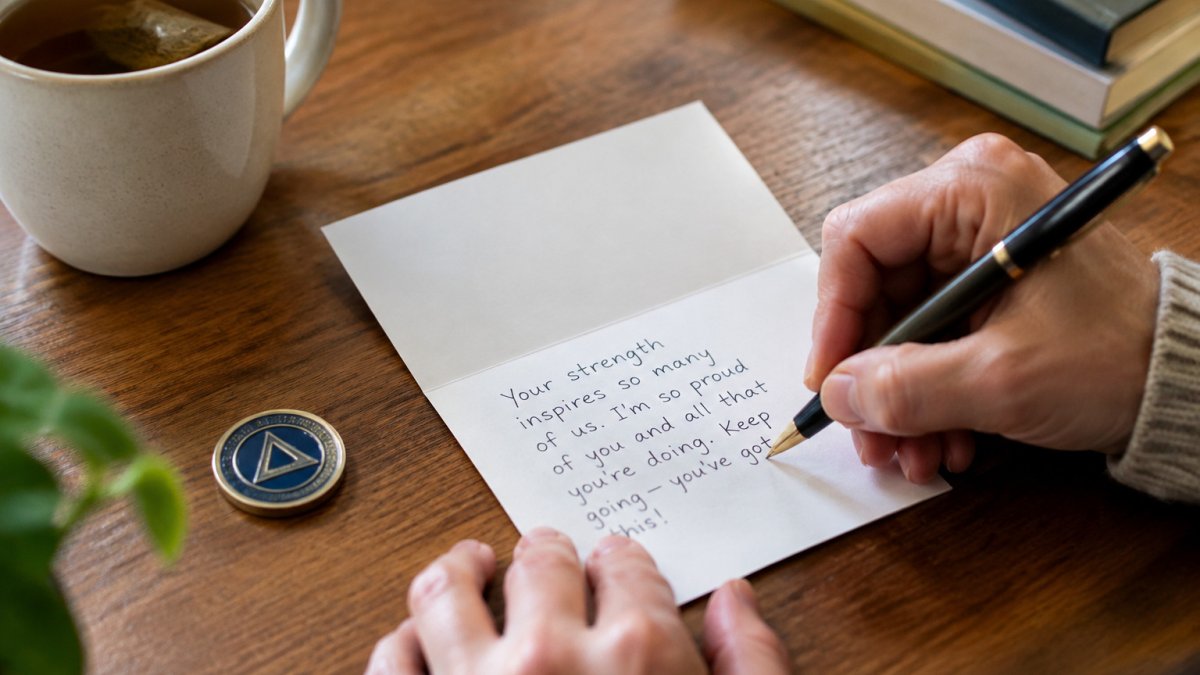
- Name a specific quality you admire.
- Share one memory that made you proud.
- Tell them you are glad they are in your life.
- Avoid long lectures or advice.
A card paired with a small gift can feel thoughtful. Pricing for any item depends on quantity, date, and delivery, so check the current details on the Recovery Time Links website before you order.
When Someone Doesn't Want to Talk or Refuses Help
Sometimes a person in recovery will not want to talk, or will turn down your offer. This can be painful, but it is common. Try these steps:
- Accept the answer for now. Say, "Okay. I'm still here when you're ready."
- Keep reaching out lightly. A short text, such as "Thinking of you," can show ongoing care without pressure.
- Avoid ultimatums. Pressure often leads to more distance.
- Look after yourself. Support groups such as Al-Anon can help families and friends cope with their own feelings.
If you ever worry about immediate safety, contact local emergency services or a crisis line right away.
Keep the Encouragement Going, Then Take Your Next Step
Encouraging words can make a real difference, especially when they are steady and sincere. Use the ten phrases above as a guide, adjust them to your own voice, and pair them with practical support.
Frequently Asked Questions
What is an inspiring quote for someone in recovery?
Short, sincere lines tend to land best. Something like "Every day you choose recovery is a day worth honoring" or "You don't have to be perfect to be proud of how far you've come" works well. Keep the quote personal to the person's own journey, and avoid anything that sounds like a slogan or a lecture. A quote matters less than the fact that you took the time to write it down and send it.
What should you avoid saying to someone in addiction recovery?
Avoid blame, shame, and ultimatums. Phrases like "You should have known better," "Just stop drinking," or "Think about what this is doing to us" put pressure on the person and can deepen guilt. Also avoid stigmatizing language such as calling someone an "addict" or "junkie," and avoid comparing their recovery to yours or to someone else's. Ask what they need instead of assuming, and let them set the pace of the conversation.
How can you support a loved one in recovery?
Practical support usually matters as much as encouraging words. Offer to join them for a meeting, go on a walk, or share a meal without alcohol or drugs in the picture. Respect their boundaries and privacy, and ask what kind of help they want rather than deciding for them. Listen without judgment when they talk about cravings or hard days, and keep showing up consistently, because steady presence over time is what most people in recovery point to as helpful.
What can you say to someone in early recovery?
Early recovery is often the hardest stretch, so simple reassurance helps most. Try "I know this is hard, and I'm glad you're doing it" or "You don't have to figure everything out today." Acknowledge small wins without making them feel they must perform. If they mention a craving or a trigger, ask how they are coping right now. If you are worried about their safety or they mention overdose or self-harm, contact a crisis line or emergency services in your area immediately.
